
Mahama Unveils 200-Acre Textile Hub for Volta Region's Weta, Promising Up to 10,000 Jobs
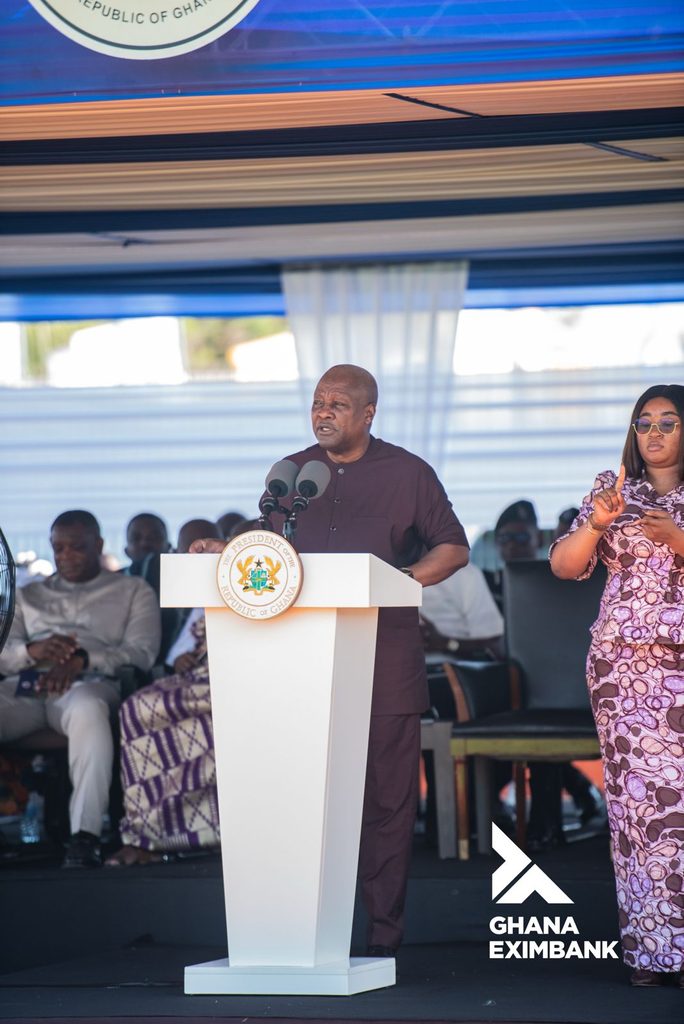

President John Dramani Mahama has announced a major industrial investment for the Volta Region, revealing that the Ghana Export-Import Bank (Ghana EXIM Bank) has been commissioned to develop a 200-acre textile and garment manufacturing enclave at Weta. The project, announced during the grand durbar of the 2026 Hogbetsotso Festival in Anloga, is projected to generate up to 10,000 jobs at full capacity, with an initial employment target of around 3,000 positions.
What was announced and where
Addressing chiefs, residents and dignitaries gathered for one of the Volta Region's most celebrated cultural festivals, President Mahama said land acquisition for the Weta industrial area has already been completed. The 200 acres set aside will be dedicated exclusively to textile and garment production, an industry the government views as a vehicle for manufacturing growth and export diversification.
"We have commissioned the Ghana EXIM Bank to commence work on a Light Industrial Area in the Weta area. Two hundred acres of land have been acquired," the President stated. He added that the zone would "initially create some 3,000 jobs and grow eventually to 10,000 jobs when it is fully operational."
The CEO of Ghana EXIM Bank, Sylvester Adinam Mensah, had earlier signalled the project's direction in September, speaking at the 2026 yam festival of the Asogli Traditional Area, where he outlined the bank's role in anchoring industrial development in the Volta Region.
The background: Part of a wider garment manufacturing push
The Weta announcement is not an isolated initiative. It follows President Mahama's commissioning in August 2026 of the Northshore Apparel Ghana Limited factory at Savelugu in the Northern Region — a facility bankrolled through a partnership between Ghana EXIM Bank, Germany's KfW Development Bank and the Agricultural Development Bank. That factory, designed to supply both local and international markets, has already brought employment to more than 2,300 workers, with expectations to scale up to 10,000 jobs as production increases.
Taken together, the two projects represent a deliberate strategy by the Mahama administration to seed export-oriented garment and textile manufacturing across different regions of Ghana, rather than concentrating industrial investment in a single location. The President framed the Savelugu facility as part of his government's broader 24-hour economy agenda, which aims to maximise productivity and employment by keeping industries running beyond standard working hours.
Why it matters for Ghana
Ghana's textile and garment sector has significant untapped potential. The country has long been associated with high-quality traditional fabrics such as kente, yet large-scale industrial textile manufacturing has historically struggled to gain sustained momentum, partly due to competition from cheaper imports and limited access to affordable financing for manufacturers.
The Weta project, if executed as described, could meaningfully shift that picture for the Volta Region. The area has a cultural and historical connection to weaving and cloth-making traditions, which means a modern industrial hub could build on existing local skills and knowledge rather than starting from scratch.
Beyond the jobs figure, an EXIM Bank-backed enclave could attract smaller garment manufacturers and suppliers looking for serviced industrial space, potentially generating a cluster effect where businesses feed into one another. This model has worked in parts of East and Southeast Asia to rapidly scale up garment exports.
- For ordinary Ghanaians in the Volta Region, the most immediate benefit would be formal employment — particularly for young people and women, who make up a significant share of the textile workforce globally.
- For the broader economy, successful garment exports would help earn foreign exchange and reduce Ghana's reliance on commodity exports such as gold, cocoa and oil.
- Policymakers and development watchers will, however, be watching implementation closely. Ghana has seen a number of industrial zone announcements over the years that have moved slowly from promise to production. The pace at which Ghana EXIM Bank can mobilise financing and attract anchor tenants to Weta will ultimately determine whether the 3,000-to-10,000 job trajectory becomes reality.
With the Hogbetsotso Festival providing a high-visibility platform, President Mahama has set clear public expectations. The government's ability to deliver on those expectations in the Volta Region will be watched by communities across the country hoping for similar investments.
Source: MyJoyOnline

Comments (0)
Be the first to comment.