
GSE Boss: Ghana Has the Investment Capital — What's Missing Are the Projects to Fund
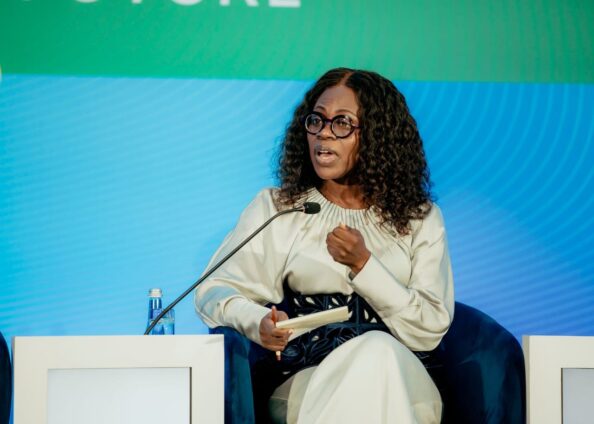

Ghana's capital market is not short of money — it is short of viable projects to invest in. That is the pointed message from Abena Amoah, Managing Director of the Ghana Stock Exchange (GSE), who used her address at the Ghana Economic Forum to challenge businesses and state-owned enterprises (SOEs) to step up and present themselves as credible destinations for long-term capital.
Speaking at the forum organised by the Business and Financial Times (B&FT), Amoah was direct: "Today, our problem is not lack of money. Our problem on this market is the lack of supply." Her remarks reframe a debate that often centres on Ghana's difficulty accessing finance, suggesting the bottleneck lies not with investors but with the entities seeking investment.
What the capital market can actually offer
Amoah outlined the range of financing tools available through Ghana's capital market that many businesses and SOEs may be overlooking. These include five-year and ten-year debt instruments available on the Ghana Fixed Income Market, as well as permanent capital — all accessible without necessarily requiring physical collateral as security.
She pointed to companies that have already successfully tapped these instruments, raising long-term funding purely on the strength of their governance structures, financial transparency and confidence in their management teams. The implication is significant: businesses do not need to own land or property to attract serious investment; they need to demonstrate that they are well-run and trustworthy.
Investors, she noted, are increasingly willing to back entities that show strong corporate governance and transparent financial reporting — qualities that remain inconsistent across much of Ghana's private and public sector landscape.
Why it matters for Ghana
Ghana is at a critical juncture in its economic recovery. With the country navigating the aftermath of a debt restructuring programme under an IMF bailout, domestic capital mobilisation has become more important than ever. Dependence on external borrowing — which contributed significantly to Ghana's debt crisis — makes it essential to develop home-grown financing channels that are sustainable and do not add to the country's foreign currency obligations.
The GSE MD specifically called out state-owned enterprises that routinely seek government budget allocations for expansion, urging them instead to explore stock market listings and bond issuances. She highlighted sectors with clear investment potential, including aviation infrastructure through the Ghana Airports Company and electricity generation projects — areas where demand is established and returns, if well-structured, could attract both local and international investors.
Crucially, Amoah noted that opening these projects to the capital market would create an opportunity for ordinary Ghanaians, diaspora investors and international institutions to directly participate in financing national development — broadening both ownership and the investor base.
For the Ghanaian diaspora in particular, which remits billions of dollars annually, structured investment vehicles backed by credible SOEs could offer a compelling alternative to simply sending money home for consumption.
The governance gap holding Ghana back
At the heart of Amoah's message is a governance challenge. Many Ghanaian companies — especially SOEs — have historically struggled with weak financial reporting, poor accountability and leadership instability, all of which erode investor confidence. Until these structural issues are addressed, the pool of capital sitting in pension funds, insurance companies and other institutional investors will remain largely untapped for productive national projects.
The GSE MD's call is therefore as much a governance reform agenda as it is a capital markets pitch. Transparency, accountability and strategic planning, she argued, are not bureaucratic niceties — they are the entry ticket to patient, long-term capital that can transform Ghana's infrastructure and productive capacity.
- Businesses and SOEs are urged to improve governance to unlock existing market capital.
- Five and ten-year debt instruments are available on the Ghana Fixed Income Market without collateral.
- Energy and airport infrastructure were cited as sectors ripe for capital market financing.
Source: The Ghana Report



Comments (0)
Be the first to comment.