
GRA Cracks Down on VAT Cheats at Accra Mall as Enforcement Blitz Set to Hit Makola, Circle and Beyond
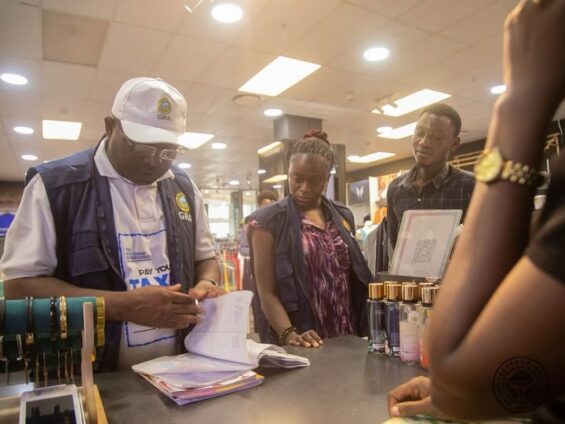

The Ghana Revenue Authority (GRA) has put Accra's retail and commercial sector on notice after a targeted compliance inspection at the Accra Mall revealed that 15 out of 20 businesses were operating in breach of VAT regulations. The findings, announced by the authority's Accra Central Tax Enforcement Unit, signal a broader and more aggressive push to close the gap between taxes owed and taxes actually collected across the Greater Accra Region.
What the inspectors found
The violations uncovered at the Accra Mall were wide-ranging. Among the most common infractions were the use of invoicing machines that have not been authorised by the GRA, failure to issue VAT invoices certified by the Commissioner-General, and the continued use of the VAT flat-rate scheme — a system that has since been abolished. Some businesses had not registered for VAT at all, while others were found to be issuing invoices selectively, only providing them to customers who specifically asked.
Joseph Anang, Assistant Commissioner and Head of the Accra Central Tax Enforcement Unit, stressed that issuing an invoice alone is not enough. He outlined three stages that businesses must complete to be considered fully compliant: issuing an approved VAT invoice, declaring all sales to the GRA, and making the corresponding tax payment. "Issue, declare and pay," he said, warning that businesses which declare but fail to pay face accumulating interest on outstanding liabilities.
The GRA also noted that some registered businesses were not keeping VAT invoices on their premises — a basic requirement that makes it impossible for inspectors to verify sales records during enforcement visits.
Why it matters for Ghana
Ghana has for years struggled with a relatively low tax-to-GDP ratio compared to its peers in sub-Saharan Africa. Domestic revenue mobilisation has become a critical priority, particularly as the country navigates its ongoing economic recovery programme with the International Monetary Fund (IMF). Every cedi lost to VAT non-compliance is a cedi that cannot fund roads, schools, hospitals or public services.
VAT is one of the most significant contributors to Ghana's total tax revenue. When businesses collect VAT from customers but fail to remit it to the state — or avoid issuing invoices altogether to conceal sales — the government is effectively robbed of funds it has already, in a sense, been paid. The problem is especially acute in busy commercial areas where cash transactions are common and oversight has historically been difficult to enforce.
The GRA's crackdown therefore carries implications beyond just the Accra Mall. It reflects a wider institutional determination to bring informal and semi-formal business practices into line with the law, and to demonstrate to ordinary Ghanaians that tax enforcement applies equally to established commercial outlets and market traders alike.
Who should prepare next
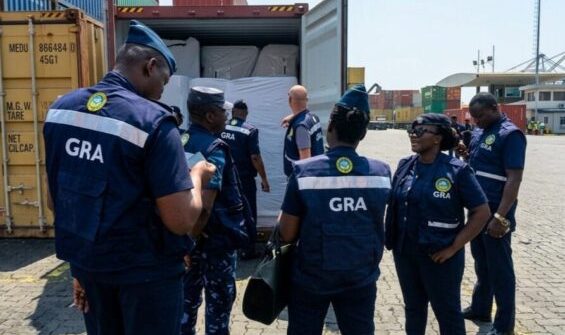
Anang made clear that the Accra Mall inspection is just the beginning. The GRA has announced plans to extend its enforcement exercise to other major commercial hubs in Accra, including New Town, Circle, Adabraka, Makola and Okaishie — areas known for high volumes of retail and wholesale trade.
His message to business owners in those locations was direct: "Don't wait for us to come because we'll surely come. Do the right thing before we get there because when we get there, there wouldn't be any excuses."
- Businesses should verify that their invoicing machines are authorised by the GRA's Commissioner-General.
- All sales must be declared and the corresponding VAT payment submitted — declaration without payment is not sufficient.
- The abolished VAT flat-rate scheme must no longer be used; businesses still operating under it face enforcement action.
The authority has urged all VAT-registered businesses to regularise their records proactively before enforcement teams arrive at their premises. Penalties, interest charges and further legal action remain on the table for those found to be non-compliant.
Source: The Ghana Report



Comments (0)
Be the first to comment.