
Ghana to Build 16 New Senior High Schools as Government Tackles Double-Track Crisis


The Government of Ghana is moving to ease the pressure on the country's secondary education system by constructing new facilities for 16 senior high schools, a major initiative aimed at dismantling the double-track system that has disrupted learning for hundreds of thousands of students since its introduction.
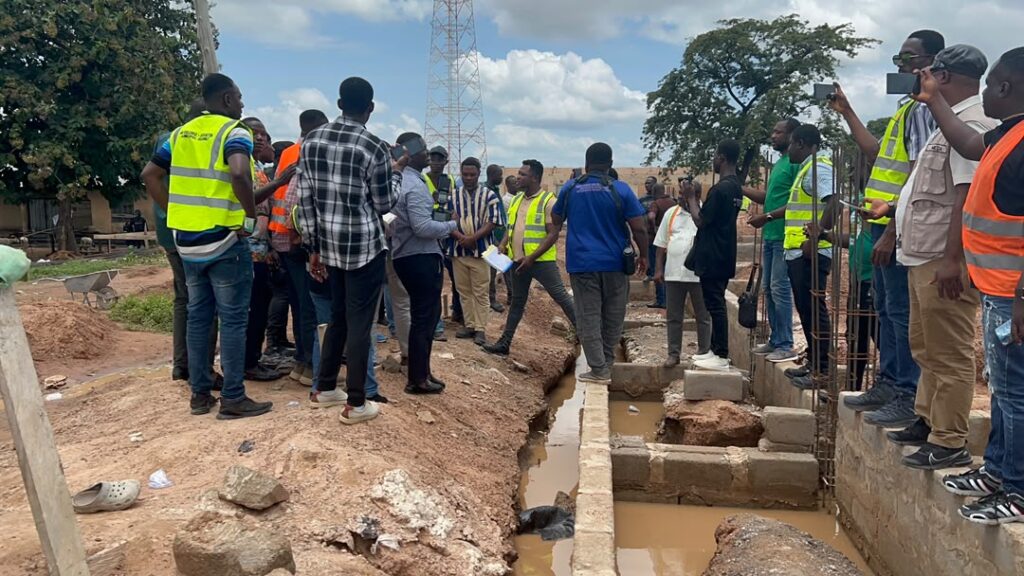
The announcement was made during an official visit to the Upper West Region, with officials inspecting ongoing Ghana Education Trust Fund (GETFund) projects, including work at Han Senior High School. The initiative represents one of the most significant infrastructure investments in education in recent years, targeting the core infrastructure challenges that have plagued Ghana's secondary education sector.
Understanding the Double-Track System Problem
Ghana introduced the double-track system in 2017 as a temporary measure to manage overcrowding in senior high schools following the Free Senior High School (FSHS) policy. Under this system, students are divided into two groups attending school on alternating schedules, meaning students spend less time on campus and face compressed academic calendars. The system has drawn criticism from educators, parents, and students who argue it compromises learning quality, affects examination performance, and creates logistical challenges for families.
The accumulated effect has been significant disruption to the academic calendar and concerns that student attainment has suffered as a result of the reduced contact time with teachers and learning materials. Teachers have also reported difficulty delivering comprehensive curricula within the compressed timeframes.
The Infrastructure Solution
By constructing purpose-built facilities for 16 new senior high schools, the Government aims to increase overall capacity and allow the double-track system to be phased out completely. This approach recognises that the real problem has always been insufficient physical infrastructure to accommodate the increased student intake from the free secondary education policy.
The new schools will be distributed strategically across the country, with particular focus on regions that have experienced the most acute capacity challenges. Construction is being funded through GETFund, which has been mobilised to prioritise education infrastructure development across multiple sites simultaneously.
Why It Matters for Ghana
For Ghanaian families and students, the elimination of the double-track system represents a return to normal academic operations. Students will have full-time access to school facilities, laboratories, libraries, and teacher support. For educators, it means capacity to deliver complete syllabuses without compressed timelines.
The economic implications are equally important. The double-track system has created inefficiencies in resource use—schools have effectively had to operate two separate academic programmes. Moving to a single-track system with expanded capacity improves operational efficiency and allows better deployment of teaching staff and educational resources across the system.
For Ghana's long-term competitiveness, stable and uninterrupted secondary education strengthens the foundation for tertiary education and workforce development. Regional development is also a consideration, as the distribution of new schools should help reduce educational inequality between urban and rural areas.
The success of this initiative will depend on timely completion of construction, adequate staffing and resource allocation to the new schools, and ensuring that capacity expansion keeps pace with student population growth in coming years.
Source: 3News



.jpg)
Comments (0)
Be the first to comment.