Augustine Boakye's European Journey: From WAFA's Golden Era to French Football's Elite
Augustine Boakye represents a particular kind of Ghanaian football story: a young talent who emerged from one of West Africa's most celebrated academies, captivated domestic audiences with his brilliance, and then stepped into the shadows of international football to forge a different path. Now 25, the Bompata-born winger has recently joined Ligue 1 side Saint-Étienne, marking a significant moment in a career that began with extraordinary promise at WAFA in Sogakope.
The WAFA Academy Phenomenon
During the mid-2010s, WAFA became synonymous with a particular brand of Ghanaian football. The academy in Sogakope produced a generation of technically gifted players who played with a distinctive style characterised by intricate passing, intelligent movement and the courage to build attacks from the back. Names like Gideon Waja, Majeed Ashimeru and Samuel Tetteh emerged from this same factory.
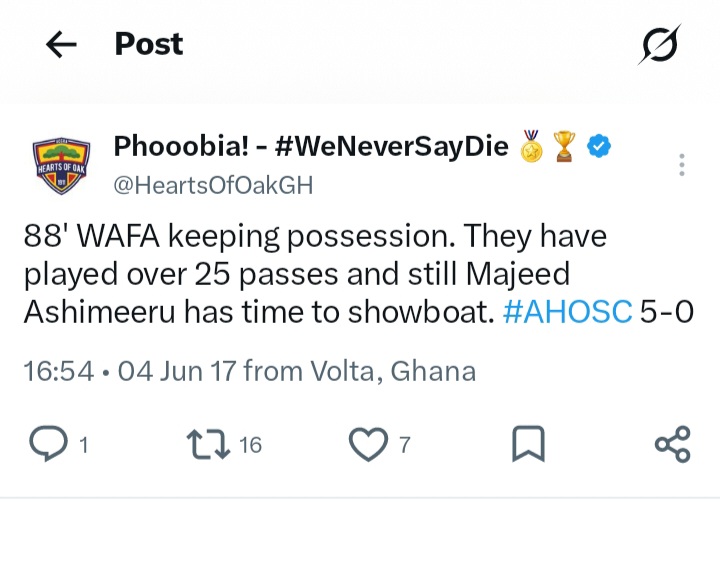
Boakye arrived during WAFA's most dominant period. For six consecutive seasons between 2015 and 2021, the Academy Boys recorded devastating victories, including a 5-0 demolition of Hearts of Oak in 2017 and a remarkable 5-1 victory over Liberty Professionals in January 2021, during which Boakye was among the scorers. His performances during the 2020/21 Ghana Premier League season were particularly striking: 29 matches, nine goals, 13 assists and seven Man of the Match awards earned him a nomination for the Ghana Premier League Player of the Season at just 20 years old.
What set Boakye apart was not merely statistics. Observers noted a distinctive quality to his play—the first touch that seemed to bend the rules of physics, the ability to create space where none existed, and a willingness to run at defenders with purpose. He possessed what scouts describe as intelligence on the ball, making him stand out among peers who were content to participate rather than control matches.
The Quiet Transition to European Football
Like many WAFA graduates, Boakye's next chapter took him away from Ghana's spotlight. He joined Austrian side Wolfsberger, where the nature of his development changed fundamentally. The Austrian Bundesliga presented different challenges: faster decision-making, more physical defending, and opponents far less interested in being entertained by skill.
Over 43 league appearances for Wolfsberger, Boakye evolved from an exciting prospect into a professional footballer. He learned to function effectively without possession, to make quicker decisions, and to navigate spaces that required defensive discipline alongside attacking flair. This education, conducted largely away from Ghanaian media attention, prepared him for the next stage.
Why This Matters for Ghana
Boakye's move to Saint-Étienne is significant for Ghanaian football for several reasons. First, it demonstrates the pathway that remains available to young talents willing to leave Ghana's comfort zone for sustained development in competitive European environments. Second, it offers a different narrative to the many WAFA graduates whose subsequent careers stalled or remained inconsistent—proving that early domestic dominance can translate into genuine European professional football if matched with the right mindset and opportunity.
Saint-Étienne, a club with considerable pedigree in French football, represents a substantial leap. The club's history means expectations are high, and their Ligue 1 platform offers Boakye regular visibility at a level that significantly elevates his profile compared to Austrian football. For Ghana, success at this level would affirm that WAFA's particular brand of technical, possession-based football remains valuable at the highest levels of European competition.
Whether Boakye becomes a regular fixture at Saint-Étienne or represents another case of a talented Ghanaian who struggles to establish himself abroad, his journey underscores a broader pattern: the gap between domestic dominance and sustained European success remains substantial, but the pathway exists for those willing to embrace the transition.
Source: The Ghana Report

Comments (0)
Be the first to comment.