
NAIMOS and Amenfi West MP Chart New Course to Permanently End Galamsey in Western Region
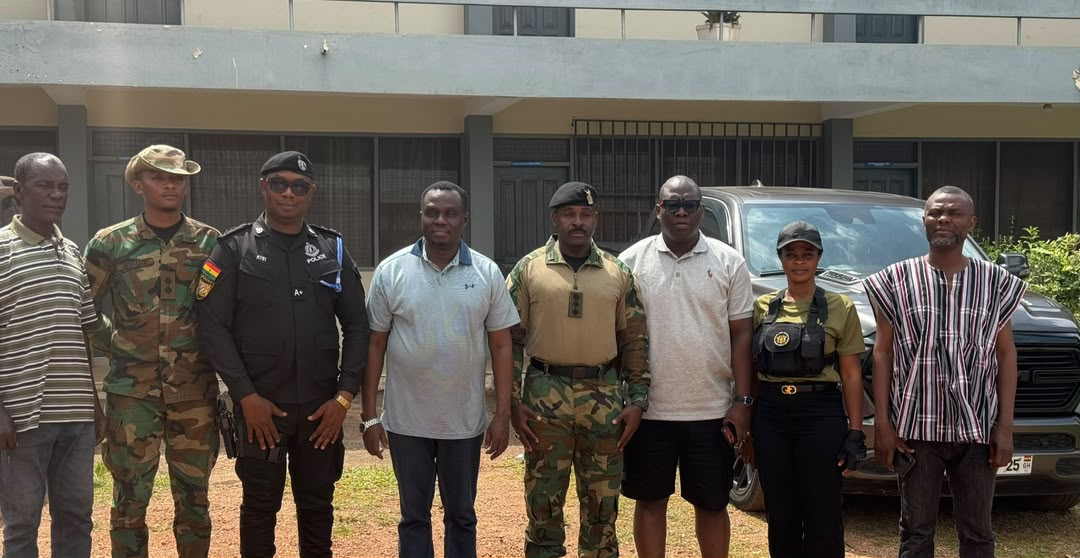

Ghana's National Anti-Illegal Mining Operations Secretariat (NAIMOS) and the Member of Parliament for Amenfi West, Dr Eric Afful, have agreed to deepen collaboration in the battle against illegal mining — commonly known as galamsey — with both sides committing to a strategy that goes beyond short-term enforcement raids and tackles the problem at its roots.
The discussions, held on Saturday, 31st October, brought together NAIMOS Director of Operations, Colonel K. S. Appiah, and the Amenfi West MP at a meeting that examined the devastating environmental, security and socio-economic toll illegal mining has taken on communities in the Western Region.
A shift from raids to lasting control
A central theme of the engagement was NAIMOS's evolving operational philosophy. Colonel Appiah outlined a move away from one-off enforcement swoops — which have often seen illegal miners return to cleared sites shortly after security forces withdraw — towards a more comprehensive clear, stabilise, monitor and handover framework.
Under this approach, areas freed from illegal mining activity will be stabilised and monitored over time before being formally handed over to local authorities and communities to maintain. The strategy will be reinforced by enhanced riverine patrols conducted in partnership with the Ghana Navy, particularly along the heavily affected Ankobra River corridor, which has long been a hotspot for galamsey operations.
Colonel Appiah was equally firm on boundaries: rivers, forest reserves and areas around critical public infrastructure remain absolute no-go zones for illegal miners, with no exceptions.
He also issued a pointed warning to political, traditional and community leaders, urging them not to interfere in arrests or advocate for the return of equipment seized during enforcement operations. Depoliticising the anti-galamsey fight, he stressed, is essential if progress is to be made and sustained.
Why it matters for Ghana
The Western Region sits at the heart of Ghana's galamsey crisis. The Amenfi West constituency, in particular, has witnessed significant destruction of cocoa farms — a sector that underpins the livelihoods of hundreds of thousands of Ghanaian families and contributes substantially to the country's foreign exchange earnings. Waterways such as the Ankobra River have suffered severe pollution from mercury and other chemicals used in illegal mining, threatening both drinking water supplies and aquatic ecosystems.
Ghana has battled galamsey for years, with successive governments launching operations — from the military-led Operation Vanguard to various task forces — with mixed long-term results. The persistent challenge has been preventing miners from returning once enforcement pressure eases. The NAIMOS strategy of sustained monitoring, backed by naval patrols, represents an attempt to address this recurring weakness.
Dr Afful, who chairs Parliament's Economy and Development Committee and sits on the Ministerial Advisory Board of the Ministry of Lands and Natural Resources, is well placed to influence both legislation and policy in this space. His pledge to support stronger accountability measures and to engage traditional leaders and community structures in public education efforts adds an important local dimension to what has often been a top-down enforcement exercise.
Community involvement and lawful pathways
Both parties acknowledged that enforcement alone cannot resolve the galamsey menace. Many individuals engaged in illegal mining do so out of economic necessity, and the meeting gave attention to creating viable pathways for miners to transition into lawful, environmentally responsible operations.
Dr Afful proposed that NAIMOS hold entry and exit meetings with local stakeholders during enforcement operations, enabling community-level security structures to monitor cleared areas and act as an early warning system against returning illegal miners. He also pledged to mobilise constituency structures to encourage residents to report illegal mining to the appropriate authorities.
The NAIMOS delegation, which included Spokesperson Paa Kwesi Schandorf, the area commander and a Police Liaison Officer, reaffirmed the Secretariat's commitment to working alongside parliamentarians, traditional rulers and local communities to protect Ghana's rivers, forests, farmland and public infrastructure.
Both sides concluded that lasting success will require decisive enforcement, stronger legislation, genuine community buy-in, responsible mining practices and an unrelenting commitment to public education.
Source: MyJoyOnline



Comments (0)
Be the first to comment.