Government begins major road rehabilitation in Upper East as contractor debts cleared

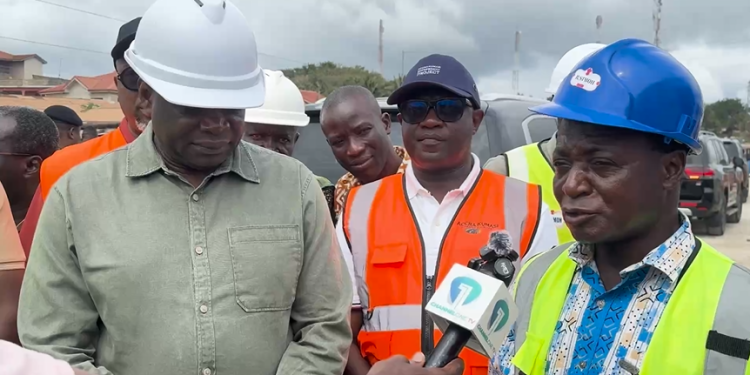
The government has initiated reconstruction work on the strategically important Navrongo–Chuchuliga–Tumu road corridor in the Upper East Region, marking a significant step towards improving connectivity between major commercial hubs. Roads Minister Governs Kwame Agbodza announced that the project has commenced with the primary objective of establishing a secure and reliable route linking Bolgatanga to Wa.
The project restart follows the settlement of GHS 23.1 billion in accumulated contractor arrears, a financial burden that had stalled infrastructure development across multiple road projects nationwide. This payment represents a critical resolution of the cash-flow crisis that has hampered road construction and maintenance work over an extended period.
Importance for the Northern Corridor
The Navrongo–Chuchuliga–Tumu road serves as a vital commercial artery connecting the Upper East and Upper West Regions. Once completed, the improved corridor will facilitate seamless trade and movement between Bolgatanga, the regional capital of the Upper East, and Wa in the Upper West. This route is essential for transporting agricultural produce, livestock, and goods between these predominantly farming communities and larger markets across Ghana and the West African region.
The road's rehabilitation is expected to reduce travel time significantly, lower transportation costs for traders and commuters, and improve access to healthcare, education and government services in these remote areas. The corridor also supports cross-border trade and movement within the ECOWAS region, connecting Ghana to Burkina Faso.
Why it matters for Ghana
Infrastructure development in Ghana's northern regions has long faced funding constraints and implementation delays. The Upper East and Upper West have historically received less investment in road infrastructure compared to southern regions, creating a development gap. This project signals renewed government commitment to addressing regional inequality and promoting inclusive national development.
The clearance of contractor arrears is equally significant. The GHS 23.1 billion payment represents accumulated debts owed to construction firms, which had created a ripple effect throughout the construction industry. Without these payments, contractors could not procure materials, pay workers, or undertake new projects, effectively freezing infrastructure development across the country. Settling these arrears frees up the sector to progress stalled initiatives and accept new contracts.
For Ghanaians in the north, improved road infrastructure directly translates to better agricultural trade outcomes, reduced healthcare access challenges, and enhanced quality of life. Students in these regions benefit from easier movement to educational institutions, whilst economic activities expand when transport costs decrease.
Broader infrastructure goals
The reconstruction of this corridor forms part of the government's wider national road network improvement agenda. Ghana's road infrastructure remains a priority area, with several major projects either ongoing or awaiting commencement across the country. The successful completion of the Navrongo–Chuchuliga–Tumu road will demonstrate progress toward connecting regional economies and supporting the government's decentralisation and regional development policies.
As work progresses, residents and businesses in the Upper East should expect temporary disruptions to normal traffic flow. The government has not announced a specific completion timeline, but the project's commencement is expected to accelerate once contractor resources are fully mobilised.
Source: 3News

Comments (0)
Be the first to comment.