
Ghana's music publicists must choose: professional integrity or toxic noise
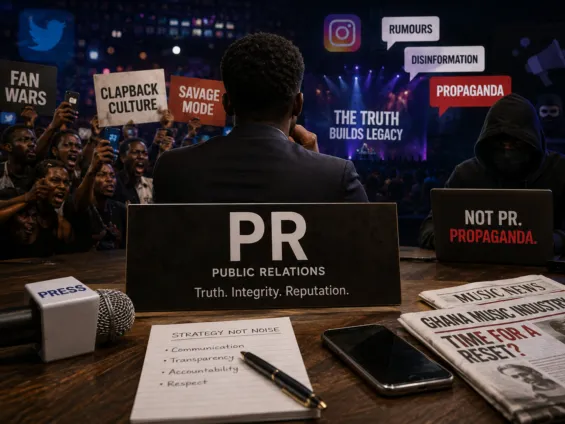

Ghana's music industry faces a critical crossroads as the line between professional public relations and fan-fuelled aggression continues to blur. Leading voices in the creative sector are sounding alarm bells over the erosion of traditional PR standards, arguing that loudmouth tactics and social media confrontation have become mistaken for effective communication strategy.
The concern is particularly acute during high-stakes moments such as award season campaigns. Recent competitions, including races for the Telecel Ghana Music Awards' Artist of the Year, have demonstrated how publicists and artist representatives increasingly engage in heated exchanges across radio, television and digital platforms—behaviour that mirrors political contests more than professional communications work.
What professional PR actually means
The Chartered Institute of Public Relations defines the discipline as a planned, sustained effort to build and maintain goodwill and mutual understanding between organisations and their audiences. This requires listening, relationships with journalists, crisis management and narrative development—quiet, strategic work often invisible to the general public.
International standards of practice are unambiguous: PR professionals must communicate with honesty, accuracy and fairness. They must verify information before sharing it, correct inaccuracies and never deliberately mislead through omission or distortion. The profession's core values centre on integrity, independence and loyalty to clients achieved through ethical means, not at any cost.
Yet in Ghana's entertainment space, a different standard has taken hold. The most visible publicists are often those willing to trade insults on social media, mobilise aggressive fan responses and manufacture flattering narratives regardless of factual accuracy. These highly visible figures increasingly set industry expectations, overshadowing the quieter professionals who build lasting reputation through genuine relationship management.
Fan power versus professional responsibility
Ghana's music industry operates within intensely polarised fan ecosystems—Bhim Nation, Shatta Movement, SarkNation and others represent powerful digital communities capable of rapid mobilisation, ticket sales and artist defence. This fan power is a genuine asset, common to all major music markets worldwide.
The problem emerges when communications professionals begin acting as fan soldiers rather than impartial strategists. A publicist defending an artist aggressively online becomes indistinguishable from the artist's most loyal supporters, yet this blurs a critical distinction: the moment professionals join the toxicity, they stop managing reputation and start damaging it.
When a communications expert insults rival artists, mocks opposing fan bases or deliberately provokes conflict, they contribute to industry-wide polarisation that ultimately harms all stakeholders—including their own clients. The question becomes urgent: if the publicist is engaged in the fight, who is actually protecting the artist's long-term reputation?
Why it matters for Ghana's creative economy
The erosion of professional standards in music PR has broader implications for Ghana's entertainment sector as it seeks international recognition and commercial growth. Global audiences, international investors and major platforms increasingly expect professional conduct from industry representatives.
An industry known for toxic communication battles, unverified claims and aggressive social media conduct struggles to attract legitimate partnerships, sponsorships and investment. Labels and artists looking to expand beyond Ghana's borders quickly discover that international success requires communicators who operate by international professional standards.
Additionally, younger publicists entering the industry may internalise aggressive tactics as normal practice, perpetuating a cycle that undermines the profession's credibility. If Ghana's music industry is to mature into a globally competitive creative economy, it requires communications professionals who understand that true advocacy for artists means building sustainable reputation through integrity, not manufacturing attention through noise.
The conversation unfolding within industry circles suggests growing recognition that this reset is overdue—and necessary for Ghana's music to reach its full commercial and artistic potential on the international stage.
Source: The Ghana Report




Comments (0)
Be the first to comment.