GES releases funds to senior high schools for food and student supplies
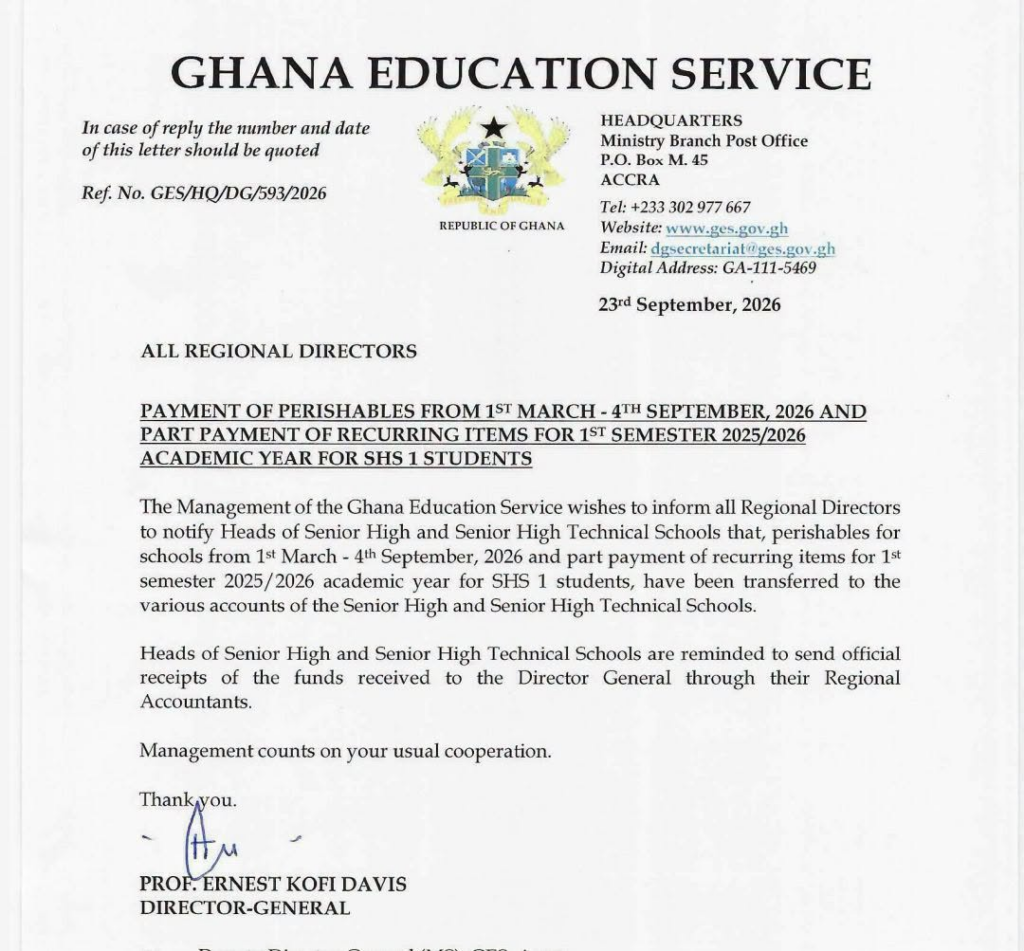
The Ghana Education Service has released funds to senior high schools and technical institutions across the country to cover essential supplies including food and recurring items for students, marking an effort to ensure schools are adequately resourced as the 2025/2026 academic year progresses.
According to an announcement from GES management on Wednesday, September 23, the transfers cover perishable supplies—primarily food items—provided between March 1 and September 4, 2026, as well as partial payment for recurring materials needed by Senior High School 1 (SHS 1) students during the first semester of the academic year. The funds have already been deposited into the bank accounts of beneficiary schools nationwide.
Implementation and accountability
Regional Directors have been instructed to notify school heads about the transfers so they can properly account for the money received. The GES has also issued a directive requiring heads of schools to submit official receipts for the funds to the Director-General through their respective Regional Accountants, establishing a clear audit trail and ensuring transparency in how the money is spent.
This requirement reflects the GES's commitment to financial accountability in school management. Schools receiving these funds are expected to use them strictly for the purposes outlined—covering food costs and student supplies—and must provide documentation proving how the money was utilised.
Why it matters for Ghana
Adequate funding for school feeding and student supplies is critical to Ghana's education system. When schools lack resources for basic items like food and learning materials, it directly affects student attendance, nutrition, and academic performance. Many Ghanaian parents struggle to provide these essentials, making institutional support essential for keeping children in school, particularly in less wealthy communities.
This transfer demonstrates the government's acknowledgement that schools need consistent funding for operational costs beyond salaries and infrastructure. Food security at school helps combat malnutrition among young Ghanaians, whilst timely provision of learning materials removes barriers to education. For students in boarding facilities, reliable catering funds are especially important.
The timing—ensuring funds reach schools before or during the academic year—is also significant. Delays in education funding have historically created problems for Ghanaian schools, forcing administrators to make difficult choices about priorities or borrow money. Proactive transfers like this one help schools plan budgets effectively and maintain service quality throughout the term.
What GES expects from schools
Management has urged Regional Directors and school heads to comply fully with the directive and has expressed confidence in their cooperation. The emphasis on documentation and accountability suggests the GES is taking steps to prevent misuse of funds and ensure money reaches its intended purpose—supporting student welfare and learning.
Schools that fail to submit receipts or cannot account for funds may face scrutiny or future delays in disbursements, so the message to headmasters is clear: proper record-keeping is non-negotiable.
Source: MyJoyOnline


Comments (0)
Be the first to comment.